Funky Zest: A Modern Handwritten Typeface for Creative Branding
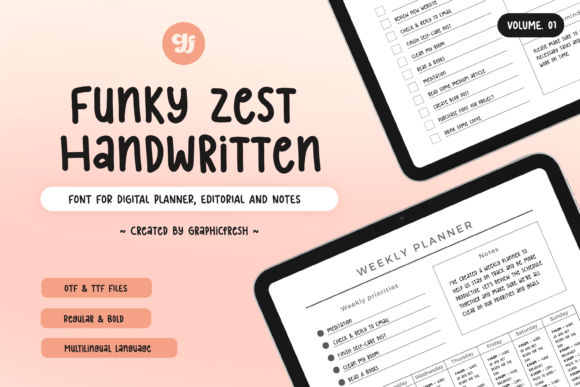
I remember staring at a blank brand board late on a Tuesday, trying to find the right voice for a new boutique skincare line. The client wanted something that felt organic and approachable but not overly cutesy or messy. My usual go-to scripts felt either too formal or too chaotic. That was when I decided to test Funky Zest. It is a modern and minimalist handwritten font perfect for digital planners and any other design you wish to create. Whether you're a student, professional, or just someone who loves to stay creative, this typeface offers a fresh take on personality-driven typography.
As soon as I dropped Funky Zest into my logo draft, the mood of the project shifted instantly. The strokes are clean yet retain that essential human touch that makes a brand feel authentic. Unlike many script fonts that rely on heavy flourishes, this one keeps things grounded. I tested it across various assets, from a simple business card to a complex packaging mockup, and it held up remarkably well.
From Logo Draft to Packaging Mockup
The real test of any creative font happens when you move it out of the header and onto physical surfaces. When I placed Funky Zest on the label for the skincare jar, the legibility remained sharp even at smaller sizes. This is crucial because many handwritten typefaces become illegible blobs when scaled down. The minimalism here works in your favor; it ensures the brand name pops without overwhelming the rest of the package design.
In logo design, the font acts as a strong anchor. Its slightly irregular baseline mimics natural handwriting, which builds trust with consumers looking for handmade or artisanal products. I found it particularly effective for bakery branding, coffee shop signage, and local restaurant menus. It strikes a balance between playful and professional, making it an excellent choice for small business owners who want their identity to feel warm and inviting.
However, context matters. While it shines on a product label or a social media graphic, it might struggle if used for long body text in an editorial design layout. Like most display fonts, its strength lies in short phrases, headlines, and accent text rather than paragraphs of copy. If you need a supporting typeface for dense information, you will likely want to pair it with a more neutral option.
How It Performs in Digital Spaces
Moving into web design and social media graphics, Funky Zest brings a distinct energy. On a website header, it immediately grabs attention and sets a relaxed tone for the user experience. I used it for a creative studio's Instagram post template, and the contrast between the handwritten headline and a clean sans serif caption created a beautiful visual hierarchy.
This versatility extends to digital planners and organizational tools. Since the font is designed with clarity in mind, it integrates seamlessly into templates where users need to jot down notes or highlight important dates. The characters are distinct enough to prevent confusion, which is often a problem with looser script styles. For students or professionals creating digital content, this makes Funky Zest a practical addition to their library of design assets.
When designing for mobile screens, readability is paramount. Funky Zest handles responsive scaling well, maintaining its character whether viewed on a phone or a desktop monitor. This reliability is what separates a premium font from a generic one. It feels intentional, not like a hastily drawn sketch.
Font Pairing and Visual Harmony
One of the biggest challenges in brand identity is finding a companion font that complements without competing. With Funky Zest, the best results come from pairing it with a clean sans serif or a classic serif font. A crisp sans serif like Helvetica or a modern geometric typeface allows the handwritten style of Funky Zest to take center stage while providing structural support.
If you are aiming for a more traditional look, try combining it with a high-contrast serif font. This creates an interesting juxtaposition of old and new, which can be very effective for lifestyle brands or fashion labels. Avoid pairing it with another script or handwritten font unless you are an advanced typographer, as the two can easily clash and create visual noise.
The included styles and alternates in this Script Amp collection add another layer of flexibility. You can mix standard letters with swashes or ligatures to create custom logotypes that feel bespoke. These details allow for subtle variations in spacing and flow, helping you achieve a unique brand voice that stands out in a crowded market.
Where to Use (and Where to Pause)
To get the most out of Funky Zest, consider the medium and the message. It is ideal for:
- Logo Design: Creating memorable marks for cafes, boutiques, and studios.
- Packaging Design: Adding a personal touch to product labels and boxes.
- Social Media Graphics: Crafting engaging posts and stories for Instagram or Pinterest.
- Editorial Design: Using as drop caps or pull quotes in magazines and blogs.
- Business Cards: Making a first impression that feels human and direct.
Conversely, there are scenarios where this font might not be the best fit. Formal corporate documents, legal contracts, or large blocks of instructional text should avoid this typeface. In these cases, readability and neutrality are key, and a handwritten style can distract from the core message. Additionally, for projects requiring multilingual support beyond basic Latin characters, always check the specific language coverage before committing to the design.
Before using Funky Zest in final client work, I recommend testing it thoroughly. Create a quick mockup for a real-world application, such as a storefront sign or a digital banner, to see how it behaves in different contexts. Check the file formats to ensure they include both desktop and webfont versions if you plan to use it online. This step ensures that the final output looks as crisp as it did on your screen.
A Final Note on Licensing
Finally, always review the commercial font licensing terms carefully. Even though Funky Zest is a fantastic tool for designers and entrepreneurs, usage rights vary depending on the specific license you purchase. Whether you are using it for client work, brand identity systems, packaging, merchandise, websites, digital products, or print-on-demand items, ensure your license covers the intended scope. This protects you and your clients from potential legal issues and ensures you can use the font freely within your creative projects.
Ultimately, Funky Zest proves that a modern and minimalist handwritten font can deliver serious impact. It bridges the gap between digital utility and artistic expression, making it a valuable asset for anyone looking to elevate their brand identity with a touch of personality.